Below is a list of helpful links and resources.
Suggestions? send ideas to: dnc@donotcomply.au
http://ibiblio.org/herbmed/eclectic/kings/intro.html
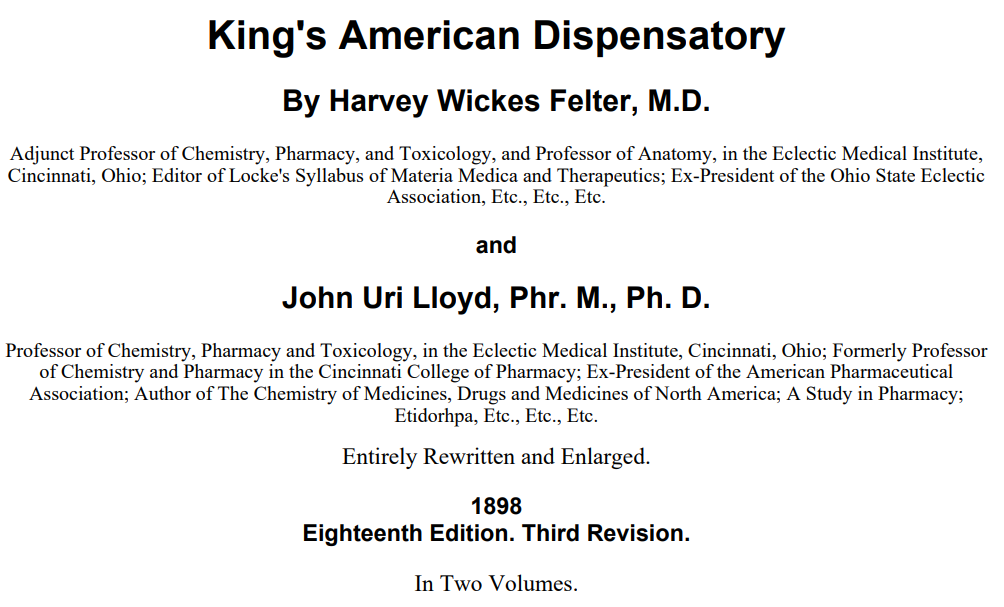
King’s American Dispensatory (1898) is a foundational two-volume botanical and medical textbook. Co-authored by eclectic physician Harvey Wickes Felter and pharmacist John Uri Lloyd, it formalized Eclectic Medicine—a 19th-century American approach emphasizing botanical remedies, pharmacognosy, and precise plant-based therapeutics.
Core Characteristics:
- Materia Medica: Exhaustive monographs on hundreds of medicinal plants, covering natural, chemical, and pharmaceutical history.
- Therapeutic Applications: Detailed physical descriptions, physiological indications, and preparation methods (tinctures, fluid extracts, infusions).
- Pharmacy: Lloyd rewrote chemical and pharmaceutical sections, standardizing extraction and preparation of active constituents.
Historical Significance: Regarded as the magnum opus of the Eclectic School, it rejected toxic mineral-based “heroic” medicine (e.g., excessive mercury) in favor of gentler botanical treatments.
Modern Perspective: It informs traditional naturopathy and herbalism. However, many 1898 protocols and efficacy claims lack modern clinical validation.
References like Henriette’s Herbal offer historical insights;
TGA guidelines provide official evidence-based evaluations of safety and indications.